













Table of Content

Customers nowadays don’t shop in straight lines. They jump between devices, platforms, and touchpoints. A product might be discovered on social media, researched on a laptop, compared in a mobile app, and finally purchased in-store or through a website. For modern brands, this behaviour isn’t the exception anymore.
That’s exactly why omnichannel eCommerce has moved from being a competitive advantage to a business necessity.
Most businesses already operate across multiple channels that include websites, marketplaces, mobile apps, email campaigns, social platforms, and even have a physical presence. But being present everywhere isn’t the same as being connected everywhere. When these channels operate in silos, customers feel the friction and businesses feel the gap.
Omnichannel eCommerce changes that dynamic by unifying every interaction into one continuous experience. Instead of treating each channel as a standalone sales point, omnichannel creates a single, connected journey where customer data, inventory visibility, pricing, and engagement move seamlessly together. Whether a buyer starts browsing on Instagram or checks availability in-store before completing a purchase on their phone, every step feels intentional, personalized, and consistent.
This shift is especially critical for organizations building a modern B2B eCommerce strategy. Today’s B2B buyers behave more like B2C consumers; they expect instant access to product information, flexible purchasing options, and personalized experiences across digital touchpoints.
At its core, omnichannel eCommerce isn’t just about selling on more platforms. It’s about creating meaningful connections between systems, teams, and customers. It empowers brands to deliver relevance at scale, reduce operational friction, and respond faster to changing buyer behaviour. More importantly, it turns scattered interactions into a cohesive brand experience.
What Is Omnichannel eCommerce?
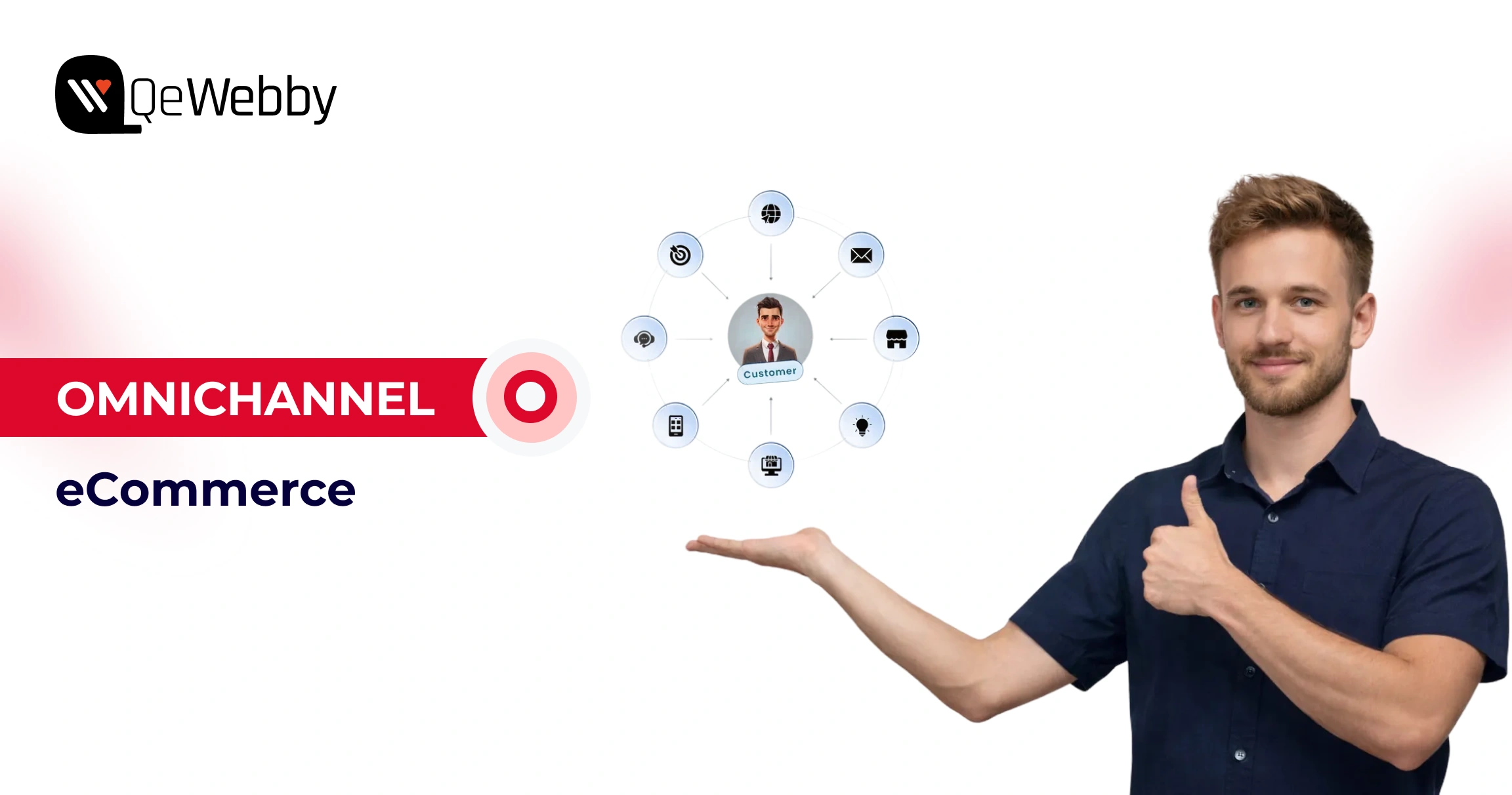
Omnichannel eCommerce is about creating one connected shopping journey across every customer touchpoint. Instead of treating your website, social media, mobile apps, marketplaces, and physical stores as separate channels, omnichannel eCommerce solutions unify them into a single experience where data, interactions, and transactions flow seamlessly.
This means a customer can discover a product on social media, check availability on your website, visit a store, and complete the purchase later on their phone without losing context along the way. Every interaction builds on the previous one, supported by shared customer data, consistent pricing, and personalized engagement.
Unlike multichannel selling, omnichannel ensures continuity rather than fragmentation. For businesses, this connectivity unlocks real operational value. The benefits of B2B eCommerce become clearer through improved buyer visibility, faster ordering, personalized pricing, and streamlined procurement workflows.
Ultimately, omnichannel eCommerce aligns your systems with modern buying behaviour, reducing friction, improving engagement, and turning disconnected touchpoints into a cohesive growth engine.
A seamless omnichannel experience begins with a scalable digital foundation. Businesses often invest in custom wordpress website development to build platforms capable of handling real-time integrations, personalized pricing, and complex B2B workflows across devices and touchpoints.
What Is The Difference Between Omnichannel and Multichannel?
At first glance, omnichannel and multichannel eCommerce appear similar. Both involve selling across multiple platforms. But the similarity ends there.
Multichannel simply means your business operates on more than one channel, which includes your website, marketplaces, social media, or mobile apps. Each channel functions independently. Pricing may vary. Customer data lives in silos. Messaging can feel inconsistent. From the buyer’s perspective, every interaction feels separate, often forcing them to restart their journey each time they switch platforms.
Omnichannel takes a fundamentally different approach.
With omnichannel eCommerce solutions, every channel is connected through shared data and unified systems. Customer preferences follow them from platform to platform. Product availability updates in real time. Branding, pricing, and communication remain consistent. The result is one continuous experience rather than a collection of disconnected touchpoints.
This distinction becomes especially important when shaping a modern B2B eCommerce strategy. Business buyers expect continuity across research, ordering, and post-purchase support. Omnichannel enables that flow, while multichannel merely provides options.
Multichannel uses multiple independent sales channels, while omnichannel integrates all channels into a single connected system with shared data and consistent customer experiences.
| Multichannel eCommerce Vs Omnichannel eCommerce | ||
|---|---|---|
| Aspect | Multichannel eCommerce | Omnichannel eCommerce |
| Core Approach | Uses multiple sales channels independently | Connects all channels into one unified experience |
| Customer Journey | Fragmented; customers restart when switching platforms | Seamless; every interaction builds on the previous one |
| Data Management | Information stored in silos across platforms | Centralized customer, product, and order data |
| Branding & Messaging | Often inconsistent across channels | Consistent branding, pricing, and communication everywhere |
| Inventory Visibility | Limited or channel-specific | Real-time inventory across all touchpoints |
| Personalisation | Basic or isolated to individual channels | Advanced personalization powered by shared customer insights |
| Operational Efficiency | Requires manual coordination between systems | Automated workflows reduce admin effort |
| Support Experience | Separate service records per channel | Single customer view for faster, better support |
| Suitability for B2B | Limited scalability for complex buying journeys | Ideal foundation for a modern B2B eCommerce strategy |
| Business Impact | Increases reach but adds complexity | Improves engagement, loyalty, and long-term growth |
Key Benefits of Omnichannel eCommerce for B2B Businesses
When executed well, omnichannel commerce delivers measurable gains across customer experience, operational efficiency, and revenue. Modern omnichannel eCommerce solutions transform fragmented touchpoints into a unified ecosystem, helping businesses serve customers better while building a scalable digital foundation. Here’s how.
Capture Every Sales Opportunity
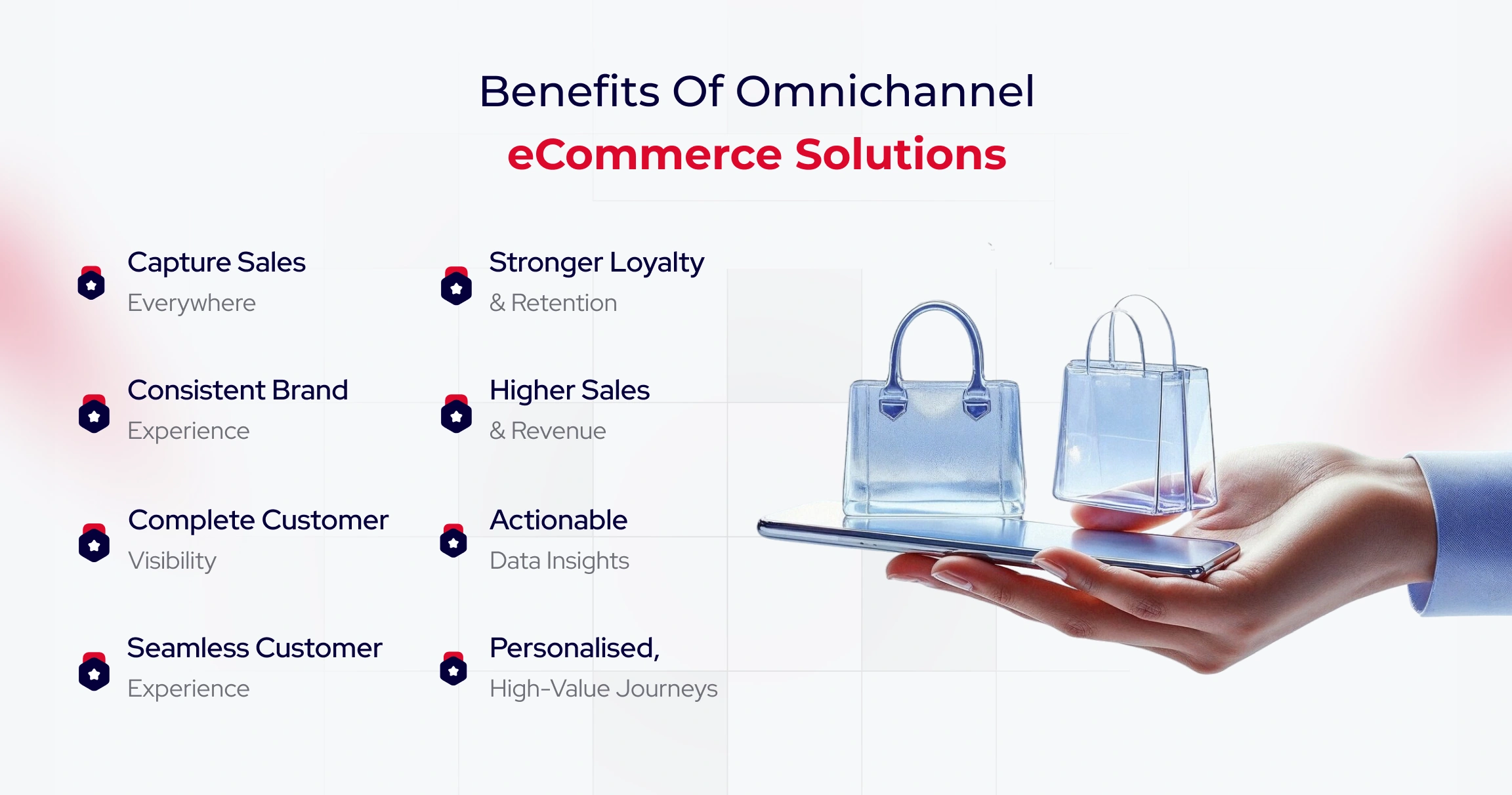
Omnichannel commerce enables businesses to meet demand wherever it appears. By connecting inventory across locations and digital channels, organizations gain real-time product visibility. Customers can browse online, check availability in-store, and complete purchases from any device without friction. This ability to say “yes” at every buying moment reduces lost sales and increases conversion rates.
Why is it needed?
Customers don’t wait. If a product isn’t available in their preferred channel, they move on. Omnichannel commerce connects inventory across locations and platforms, giving real-time visibility into stock levels. This allows businesses to fulfil demand instantly, whether purchases happen online, in-store, or through mobile, which helps reduce lost sales and improves conversion rates.
Deliver a Consistent and Cohesive Brand Experience
Why is it needed?
Inconsistent messaging, pricing, or promotions create confusion and erode trust. Omnichannel ensures customers receive the same experience across websites, marketplaces, social platforms, and physical stores. This consistency strengthens brand credibility while eliminating friction caused by disconnected systems.
Gain a Complete View of the Customer Journey
Why is it needed?
Create Personalised Experiences That Drive Higher Value
A unified customer profile allows brands to tailor recommendations, promotions, and messaging based on real behaviour and preferences. These personalized interactions increase engagement, lift average order value, and encourage repeat purchases. For organizations refining their B2B eCommerce strategy, this also supports account-based pricing, customised catalogues, and streamlined reordering.
Why is it needed?
Personalization increases engagement and revenue but only when powered by connected data. Omnichannel eCommerce solutions enable tailored recommendations, targeted promotions, and customized messaging. For organizations shaping a modern B2B eCommerce strategy, this also supports account-based pricing, personalized catalogues, and simplified reordering.
Deliver a Superior Customer Experience
Why is it needed?
Today’s buyers expect seamless journeys across devices and platforms. Omnichannel supports natural movement between channels, ensuring every interaction feels connected. This continuity improves satisfaction, increases basket size, and encourages repeat purchases.
Build Stronger Customer Loyalty and Advocacy
Why is it needed?
Trust grows through consistent experiences. When customers feel understood and supported across every touchpoint, they return more often and recommend your brand. Long-term loyalty reduces acquisition costs while creating sustainable growth.
Unlock Deeper Data and Actionable Insights
Why is it needed?
Every connected interaction generates valuable behavioural data. Omnichannel brings this information together, enabling smarter merchandising, more effective campaigns, and continuous optimization. These insights become a strategic asset rather than scattered operational noise.
Increase Sales and Revenue Performance
Why is it needed?
Removing barriers between channels directly impacts revenue. Customers who engage across multiple platforms spend more and purchase more frequently. Omnichannel commerce increases conversion rates and average order value by meeting buyers wherever they are.
Improve Inventory Management and Operational Efficiency
Why is it needed?
Integrated inventory systems provide accurate demand forecasting and real-time visibility across all channels. This reduces overstock, prevents stockouts, and creates more agile supply chains. These efficiencies represent key benefits of B2B eCommerce, helping organizations scale without sacrificing profitability.
Why Omnichannel eCommerce Is Essential for Modern Retail?
Retail is no longer driven by single sales channels. Today’s customers move effortlessly between online stores, physical locations, and social platforms, and they expect every interaction to feel connected. This growing demand for seamless, personalized journeys is why omnichannel eCommerce solutions are becoming essential for modern retail.
Shoppers now discover products on one platform, research on another, and complete purchases elsewhere. When these touchpoints don’t align, the experience breaks. Omnichannel bridges this gap by creating continuity across channels, ensuring consistency in engagement, messaging, and service.
At the same time, data plays a critical role. Tracking customer behaviour across channels provides valuable insights that help improve satisfaction and engagement. Without this visibility, marketing and sales efforts lack direction.
Omnichannel eCommerce has also evolved beyond marketing. It now supports sales, inventory, loyalty, and customer engagement as a unified business foundation, helping retailers meet rising expectations with confidence.
Conclusion
Omnichannel eCommerce is about building a business ecosystem that adapts as fast as your customers do. As buyer expectations evolve and B2B journeys become more digital-first, businesses need platforms that don’t just support growth but actively accelerate it. That’s where the real opportunity lies: turning operational complexity into competitive advantage.
QeWebby helps brands do exactly that. As a digital solutions company and omnichannel eCommerce solutions provider, we design scalable, data-driven commerce experiences that support long-term business performance. Ready to modernize your eCommerce strategy? Contact us to start building your omnichannel future with confidence and modernize your eCommerce strategy.

Snehal Shah
Head of eCommerce
Snehal brings 25+ years of eCommerce expertise to QeWebby's WooCommerce practice. He helps agencies and brands move beyond cookie-cutter builds, designing scalable, conversion-focused online stores built for long-term commercial performance.