








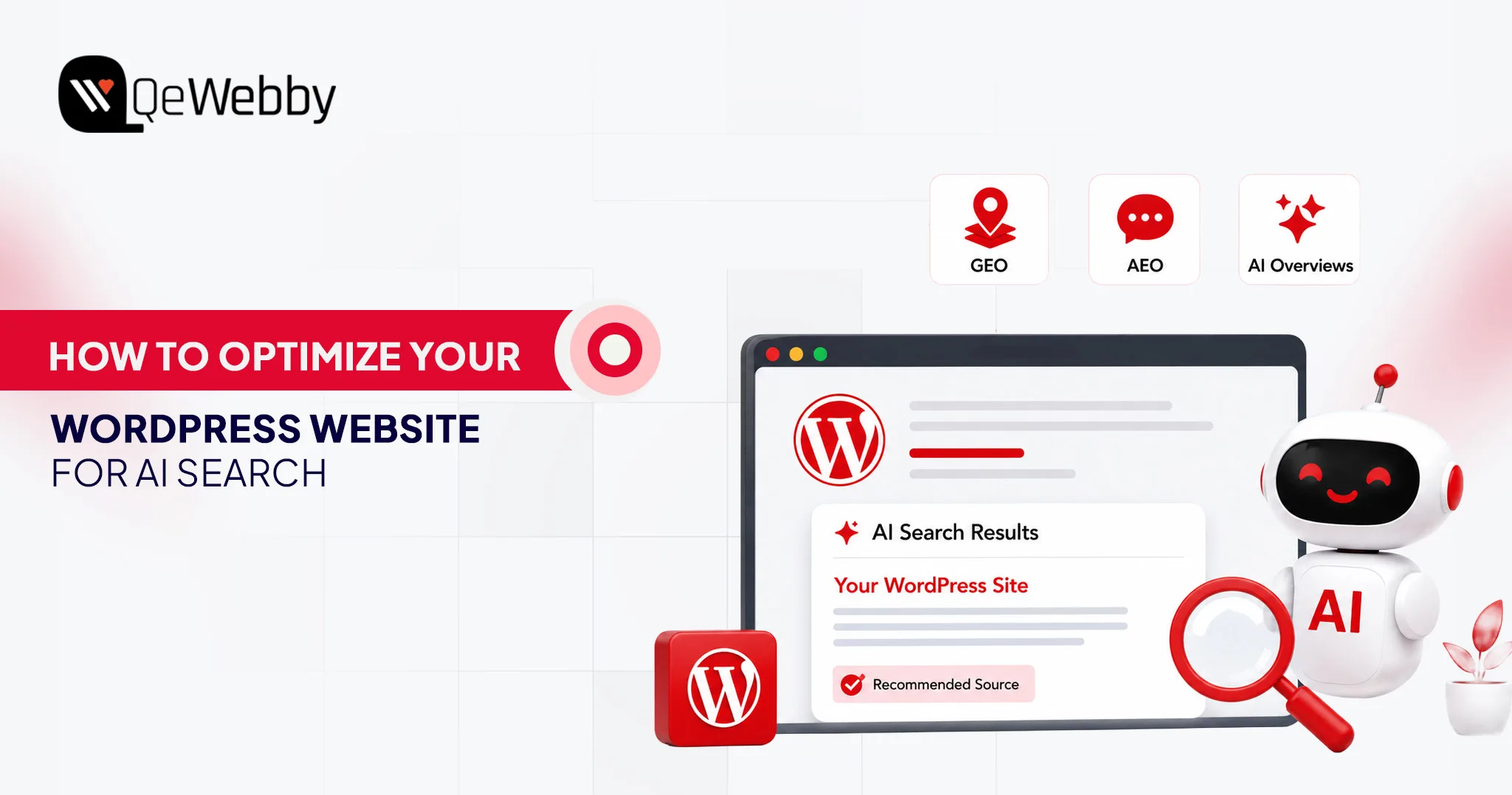





The way people search for information has changed significantly over the past few years. Instead of typing short keywords and browsing multiple websites, users increasingly ask complete questions and expect immediate, accurate answers powered by AI.
The discovery of information on online platforms by users is now accompanied by artificial intelligence (AI), and it’s changing how users discover information online. Instead of browsing multiple websites, users are increasingly receiving direct answers through AI-powered search results. Users are increasingly relying on conversational AI assistants and AI-powered search experiences such as Google’s AI Overviews, ChatGPT, Gemini, and Perplexity.
According to Gartner, traditional search engine volume is expected to decline by 25% by 2026 as users increasingly adopt AI assistants and generative search experiences. So, now businesses also need to optimize their strategies for search engines as well as AI systems.
These evolving shifts come as an opportunity and a challenge for WordPress websites. Before the AI overview, if your website was ranking and performing well in traditional search results, it didn’t guarantee a place in the AI overview. Why? Because the content of your website is lacking the structure, authority, and context AI systems rely on.
So, relying only on technical SEO improvements is not enough for improving your website’s AI search visibility. It has to be aligned with AEO and GEO rules, structure, and semantic optimization, along with high-quality content and SEO strategy.
Why Is AI Search Changing WordPress Visibility?
For that, you need to think from the user’s perspective. As a user, you would like to get the exact answer to your question, and not all users want to go through the entire information; they come with a specific question in their mind, and they ask for it.
Now, users don’t want to browse multiple websites or web pages related to their search; they want the exact information related to their search query.
AI search visibility for WordPress works in a different way. Now AI-powered search analyzes information from multiple trusted sources and generates fast, accurate responses.
Instead of prioritizing and ranking the content that simply contains the right keywords, AI systems prioritize information that demonstrates expertise, clarity, and relevance, influencing WordPress SEO service providers to adapt their optimization strategies.
According to a report, Google AI Mode reached 75 million users by December 2025, while revenue from its generative AI products increased by nearly 400%. The number itself showcases how AI-generated conversational search results are becoming users’ first choice over traditional search that relied on keywords only.
For WordPress websites, this changes how they increase their visibility, build a brand, and drive traffic.
Improving AI search visibility in WordPress requires creating content that both search engines and AI models can easily interpret, validate, and reference.
Businesses shouldn’t lose their opportunity to appear in AI searches, and it doesn’t mean that traditional SEO ranking is of lesser importance.
Appearing in AI-generated summaries, featured responses, and conversational search results helps you get more traffic, leads, authority building, and brand awareness. It’s not about AEO vs GEO vs SEO for WordPress websites, but it’s about how you can sync all of these.
Why Traditional SEO Alone Is No Longer Enough?
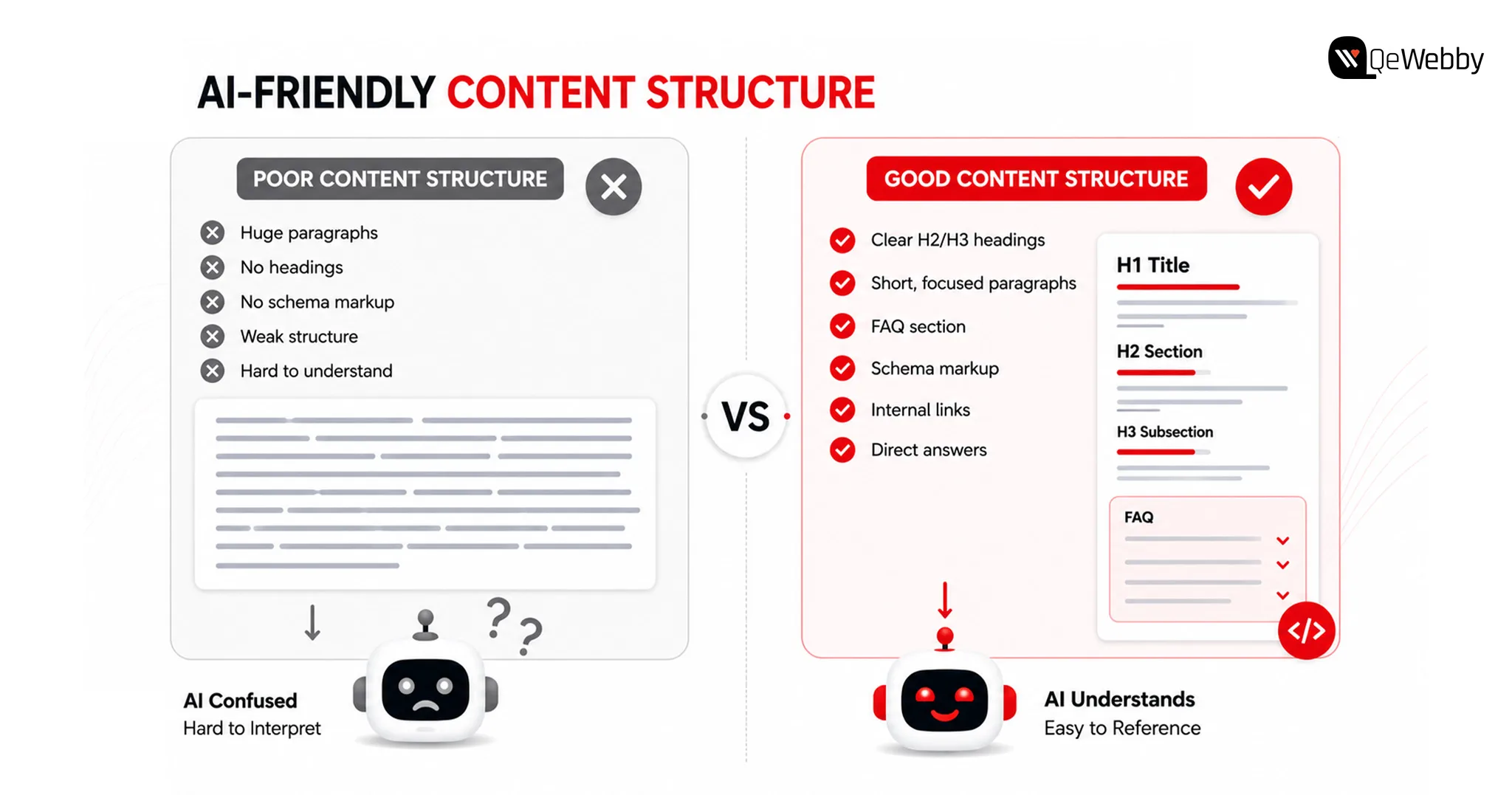
Traditional SEO continues to be an important foundation for online visibility. However, AI-powered search experiences evaluate content differently by considering context, expertise, and how well information answers user intent.
Businesses looking to improve AI search visibility on WordPress should view SEO, AEO, and GEO as complementary strategies rather than separate initiatives.
Modern AI systems evaluate how information is organized, whether it demonstrates topical expertise, and how confidently it can be cited when generating responses. This makes content quality, semantic relevance, and technical optimization just as important as keyword placement.
Traditional SEO and AI optimization work together through:
- Search Intent: Create content that answers complete user questions instead of targeting individual keywords.
- Content Depth: Cover topics comprehensively rather than publishing isolated articles.
- Technical Foundation: Maintain strong website performance, crawlability, and structured data.
- Authority Signals: Build topical expertise through consistent, high-quality content.
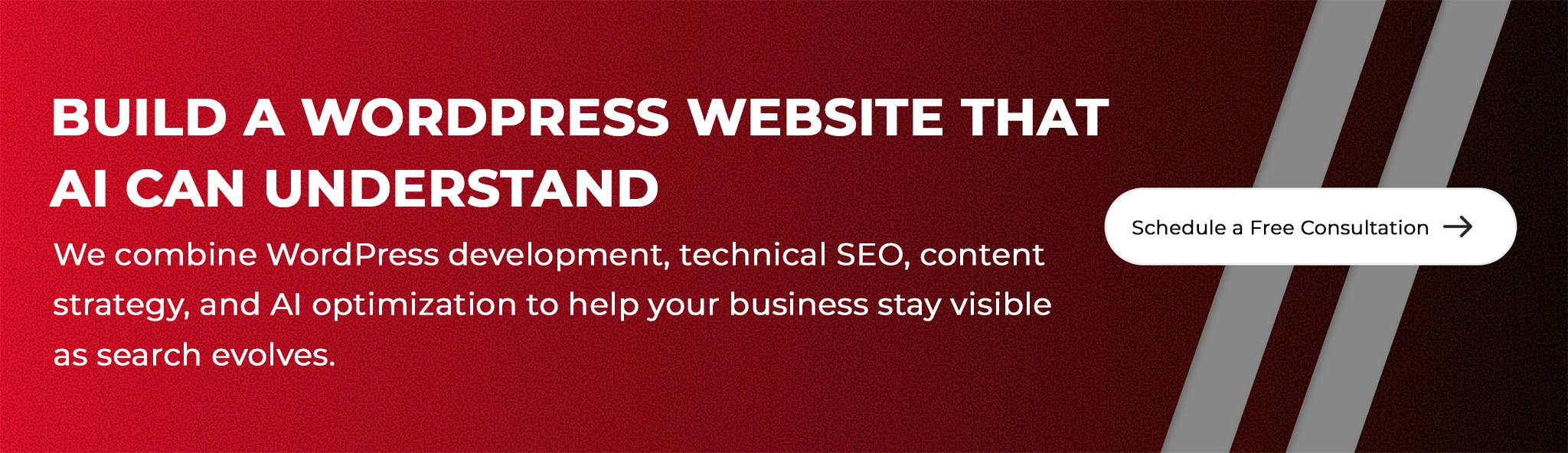
6 Strategies to Improve AI Search Visibility for WordPress Websites
1. GEO vs AEO vs SEO WordPress
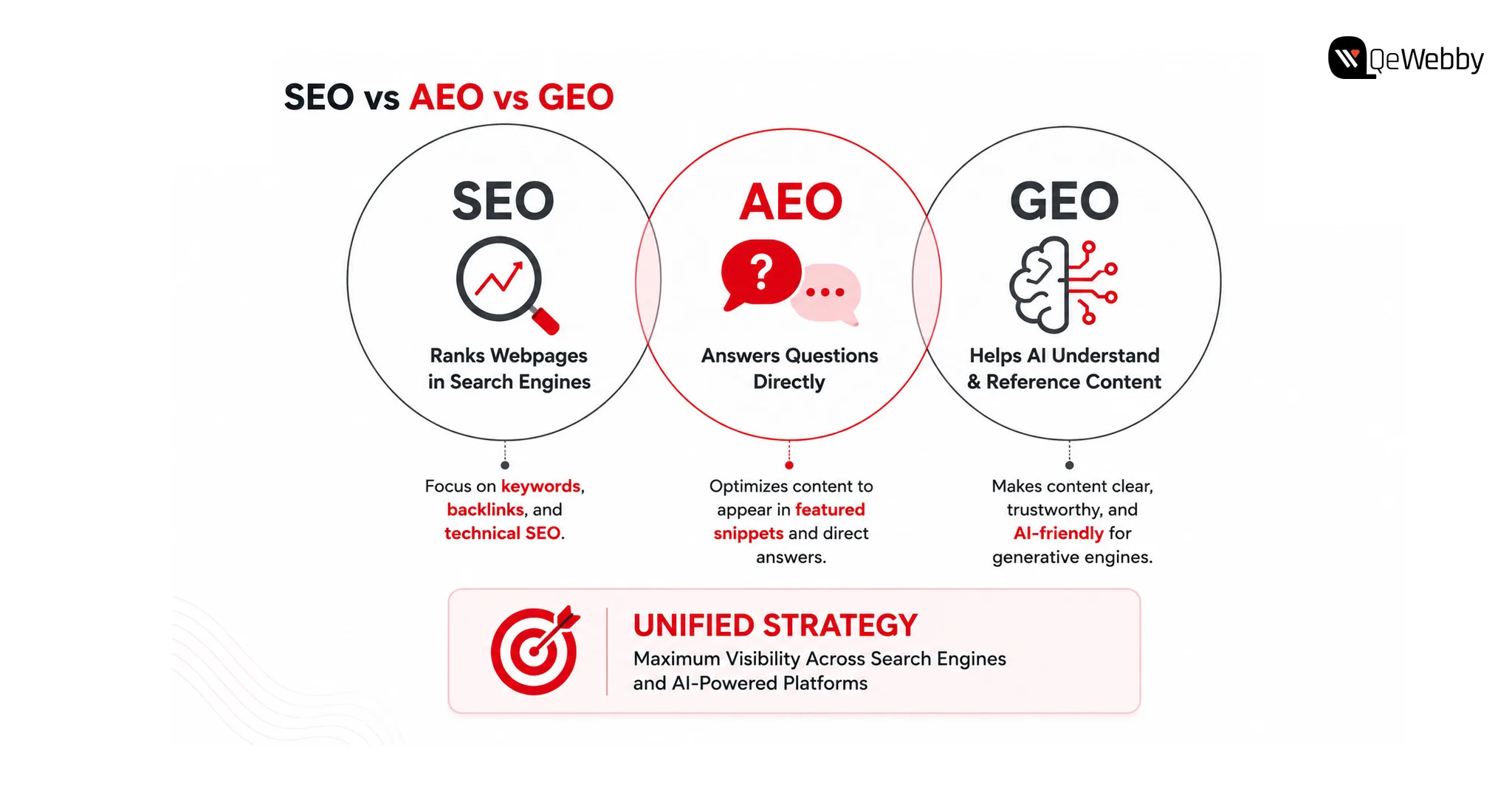
Understanding GEO vs AEO vs SEO in WordPress helps businesses build a strategy that supports both traditional search engines and AI-powered discovery platforms.
SEO focuses on improving visibility in search engine results. Answer Engine Optimization (AEO) helps content appear as direct answers to user questions, while Generative Engine Optimization (GEO) focuses on making content understandable and trustworthy enough for AI systems to reference when generating responses.
Rather than replacing SEO, GEO, and AEO, build upon them. Businesses that combine all three approaches create stronger visibility across both conventional search results and AI-powered experiences.
Together, these approaches create a more resilient search strategy across both traditional and AI-powered search.
What Steps Can WordPress Websites Take?
- Build content around user intent
- Answer questions clearly and directly
- Strengthen topical authority
- Combine SEO, AEO, and GEO strategies
Bonus Tip: Review your highest-performing blog and identify whether it answers customer questions directly or simply discusses the topic. AI systems often prioritize content that provides immediate, well-structured answers.
2. Create Content That AI Can Easily Understand
AI models process content differently from traditional search engines.
Instead of relying heavily on keyword repetition, they evaluate how clearly ideas are explained, how topics connect, and whether the content demonstrates expertise. Pages with logical headings, well-organized sections, and contextual relationships are easier for AI systems to interpret.
For businesses improving AI search visibility in WordPress, content structure becomes just as important as content quality. Articles should answer specific questions, explain concepts thoroughly, and maintain consistency throughout the page.
What Steps Can WordPress Websites Take?
- Use descriptive headings
- Organize content into logical sections
- Answer common customer questions
- Maintain a consistent content structure
Bonus Tip: Review one existing article and rewrite the introduction to answer the primary search intent within the first few paragraphs instead of delaying the key information.
3. Build Topical Authority Instead of Publishing Isolated Content
Many WordPress websites publish articles independently without connecting them to a broader content strategy.
AI systems are more likely to trust websites that consistently cover related subjects in depth. Publishing multiple high-quality articles around a specific topic helps establish expertise and improves contextual understanding across your website.
For example, a business writing about WordPress performance should also cover website security, technical SEO, Core Web Vitals, website architecture, AI optimization, and content strategy. Together, these resources create stronger topical relevance than isolated blog posts.
Strong topical authority also improves AI search visibility in WordPress by helping AI systems recognize your website as a reliable source within a specific domain.
What Steps Can WordPress Websites Take?
- Build topic clusters around core services
- Strengthen internal linking
- Update older content regularly
- Expand related content strategically
Bonus Tip: Instead of publishing your next blog on a completely new topic, create supporting content that strengthens an existing content cluster and reinforces your website’s expertise.
4. Structured Data Helps AI Understand Your Website Better
AI systems rely on context to understand webpages, and structured data provides many of the signals needed to interpret that context accurately.
Schema markup helps search engines and AI platforms identify important information such as articles, FAQs, products, services, organizations, and authors. While structured data does not guarantee AI visibility, it improves how your content is interpreted and connected with relevant search queries.
For businesses focused on improving AI search visibility in WordPress, implementing the right schema strategy can strengthen both traditional search performance and AI-generated search experiences.
What Steps Can WordPress Websites Take?
- Implement relevant JSON-LD schema markup
- Validate structured data regularly
- Add organization and author information
- Keep schema aligned with page content
Bonus Tip: Use Google’s Rich Results Test to verify that your structured data is correctly implemented and reflects the actual content on each page.
5. Technical SEO Still Influences AI Search Visibility
Even the most informative content can struggle to gain visibility if technical issues prevent search engines and AI systems from accessing it efficiently.
Website speed, mobile responsiveness, crawlability, internal linking, and clean site architecture continue to play an important role in content discovery. AI platforms often rely on search engine indexes, making technical optimization an essential foundation for long-term visibility.
Businesses investing in WordPress SEO services should ensure technical SEO evolves alongside their content strategy instead of treating them as separate initiatives.
What Steps Can WordPress Websites Take?
- mprove Core Web Vitals
- Fix crawl and indexing issues
- Optimize internal linking
- Monitor website performance regularly
Bonus Tip: Run a technical SEO audit every quarter to identify performance issues before they begin affecting your website’s visibility.
6. Monitor and Improve AI Search Visibility Regularly
Google’s AI Overviews, ChatGPT, Gemini, and Perplexity continue evolving rapidly, which means optimization cannot be treated as a one-time activity.
Businesses should regularly review how their content appears in AI-generated responses, identify pages losing visibility, and update information to maintain relevance. Monitoring user behaviour, search intent, and content performance helps ensure your website continues meeting the expectations of both users and AI systems.
An AI search visibility audit service provides valuable insights into content quality, technical readiness, semantic relevance, and opportunities to improve AI discoverability across your website.
What Steps Can WordPress Websites Take?
- Review AI search performance regularly
- Update outdated content
- Monitor changes in search behaviour
- Conduct periodic AI visibility assessments
Bonus Tip:Choose five important service pages and evaluate whether they clearly answer the questions your prospective customers are most likely to ask AI search platforms.
Is Your WordPress Website Ready for AI Search?
Many websites perform well in traditional search results but still struggle to appear in AI-generated responses. The difference often lies in how well the website communicates information rather than how many keywords it targets.
A periodic review helps identify whether your website is prepared for the evolving search landscape.
Use This Quick Checklist To Evaluate Your Website’s AI Readiness:
- Content Structure: Is information organized with clear headings and logical sections?
- Topical Authority: Does your website cover subjects in sufficient depth?
- Technical SEO: Are pages fast, mobile-friendly, and easily crawlable?
- Structured Data: Is schema helping search engines understand your content?
- Content Freshness: Are important pages reviewed and updated regularly?
Even small improvements across these areas can strengthen AI search visibility in WordPress over time. Businesses often use an AI search visibility audit service to identify gaps that are difficult to detect through traditional SEO reporting alone.
How QeWebby Helps Businesses Improve AI Search Visibility
Improving AI search visibility in WordPress involves aligning technical SEO, content strategy, structured data, website performance, and semantic optimization to create a website that both search engines and AI systems can understand.
QeWebby helps businesses build future-ready WordPress websites through practical optimization strategies designed for evolving search experiences.
AI Search Visibility Audit Service
Our AI search visibility audit service evaluates your website’s technical foundation, content quality, structured data, topical authority, and AI readiness to identify opportunities for improved visibility.
WordPress SEO Services
Our WordPress SEO services combine technical optimization, content strategy, website architecture, and performance improvements to strengthen long-term organic growth.
Content and AI Optimization
We help businesses develop content that answers user intent, improves contextual relevance, and increases the likelihood of appearing in AI-generated search experiences.
Technical WordPress Improvements
Our team optimizes website performance, structured data, internal linking, crawlability, and indexing to create a stronger technical foundation for modern search.
We focus on building WordPress websites that remain competitive as search continues evolving beyond traditional rankings.
Conclusion
As AI continues reshaping how users discover information, businesses have an opportunity to rethink how they build and optimize their digital presence. The goal is no longer just to improve rankings but to create content that can be understood, referenced, and recommended across multiple search experiences.
QeWebby helps organizations prepare for this shift through strategic WordPress SEO services, technical optimization, and a comprehensive AI search visibility audit service tailored to evolving search technologies.
Contact QeWebby to strengthen your website’s visibility across both traditional search engines and AI-powered search experiences.